Relaxing on the Beach · CC BY 2.0 · source

Bonaire / Caribbean Netherlands

Bonaire National Marine Park

Bonaire is for people who are here to dive, and nothing else particularly matters. The island is small, flat, and not conventionally beautiful, no jungle, no dramatic scenery. What it has is 86 named dive sites you can walk into from the road, a culture of radical self-sufficiency in the water, and a marine park that delivers on every single dive. Most visitors rent a truck, fill tanks, and repeat until it's time to fly home. It is very peaceful.

Can I dive here?

Experience

Beginner-friendly

Open Water minimum; no special cert needed for any standard site. Bonaire is ideal for newly-certified divers building confidence and log book dives. A Bonaire National Marine Park permit ($45 USD/year) is required for all divers, purchased on arrival at customs or at any dive shop. Nearest hyperbaric chamber is in Curacao (~30 min by small aircraft).

Conditions

Currents
moderate
Depth range
5–40 m
Visibility
20–40 m
Water temp
26–29 °C

Mostly no current on the sheltered west coast, this is what makes Bonaire the world's pre-eminent shore diving destination. Some sites have mild drift currents; none are demanding. The east coast (windward side) is not diveable. Visibility is excellent year-round; water is warm and clear in every month.

Season

JanFebMarAprMayJunJulAugSepOctNovDec

Diveable every single day of the year. Bonaire sits outside the main hurricane belt and has the most reliable weather of any Caribbean dive destination. Dec–May (dry season, light tradewinds) offers the calmest conditions and best visibility. Jun–Nov is still excellent for diving; occasional rain squalls pass quickly. There is genuinely no bad season here.

What will I see?

Bonaire's marine park is one of the oldest and most strictly enforced in the Caribbean - no fishing, no anchoring on coral, and a mandatory permit worn on every diver's wrist. The result is coral coverage and fish abundance that puts most Caribbean reefs to shame. The west coast is lined with named shore entries every few hundred metres, each with its own character. Seahorses are reliably found at multiple sites. Night diving reveals an entirely different community, octopuses, tarpon hunting under torches, Spanish dancer nudibranchs. Flamingos, the island's other icon, wade the salt flats above water.

Terrain

  • coral gardens
  • slopes
  • walls
  • sandy bottom
  • coral pillars
  • piers (artificial reef)
Seahorses (longsnout & lined)
JFMAMJJASOND

Resident populations at Willemstoren, Salt Pier, and Buddy's Reef, patient searching rewarded.

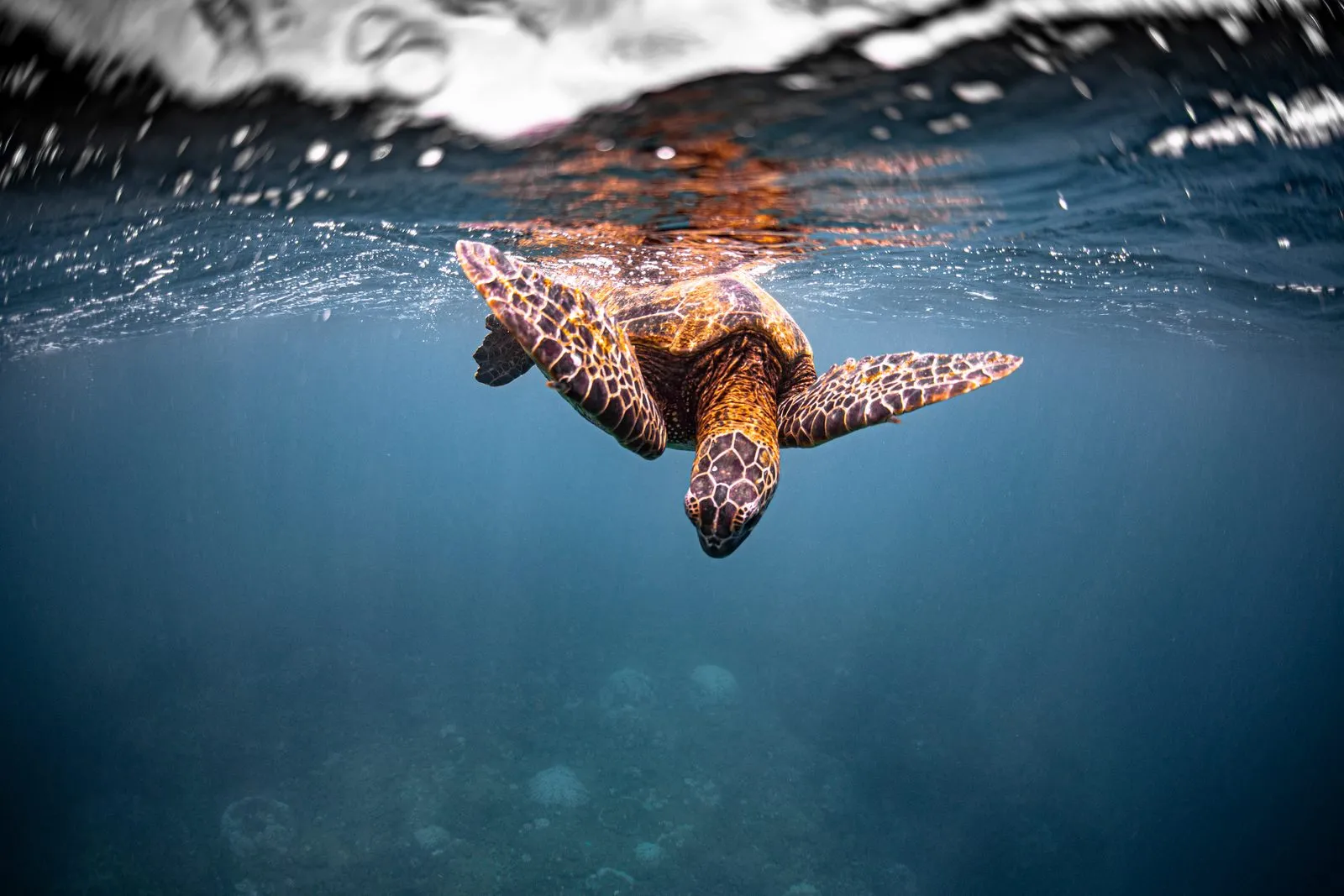
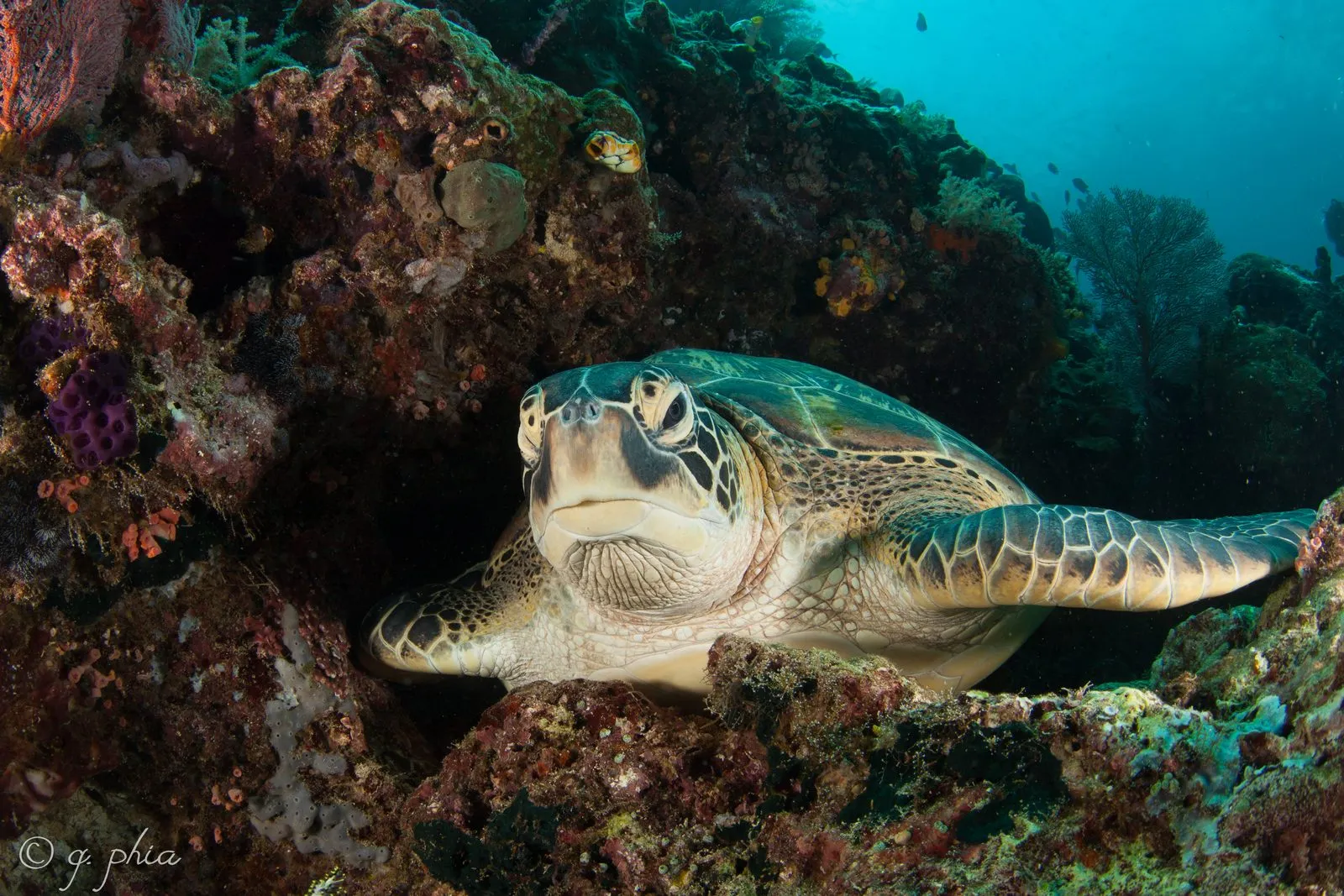
Hawksbill & green turtles
JFMAMJJASOND

Resting and grazing on the reef at nearly every site. Near-guaranteed on any dive.

Spotted eagle rays
JFMAMJJASOND

Regular sightings at Salt Pier and deeper sites along the south coast.

Night life (octopus, tarpon, Spanish dancer)
JFMAMJJASOND

Town Pier and Salt Pier night dives are among the Caribbean's best, tarpon hunting in torch light.

Reef fish density
JFMAMJJASOND

French and grey angelfish, parrotfish, queen triggerfish, dense, approachable, on every dive.

Flamingos (above water)
JFMAMJJASOND

Hundreds of Caribbean flamingos wade the salt pans in the island's south. Pink enough to seem unreal.

Top dive sites

Green turtle while diving in Bonaire National Marine Park

green turtle 4 lekuan 1, siladen, indonesia · CC BY 2.0 · source

Town Pier

Intermediate

Depth5–18 m

Concrete pier pilings covered in decades of coral and sponge, frogfish, seahorses, sleeping fish by day; tarpon and octopuses hunting at night. One of the Caribbean's legendary night dives.

  • frogfish
  • seahorses
  • tarpon at night
  • coral-encrusted pilings
  • octopuses
Green turtle while diving in Bonaire National Marine Park

HIHWNMS Sea turtle · Public domain · source

Thousand Steps

Intermediate

Depth5–40 m

Wall dropping from 5 m to 40+ m with enormous star coral heads and eagle ray visits. The 67-step entry and exit carrying tanks is the only real challenge, the dive itself is easy.

  • wall diving
  • star coral
  • eagle rays
  • soft coral
  • excellent visibility
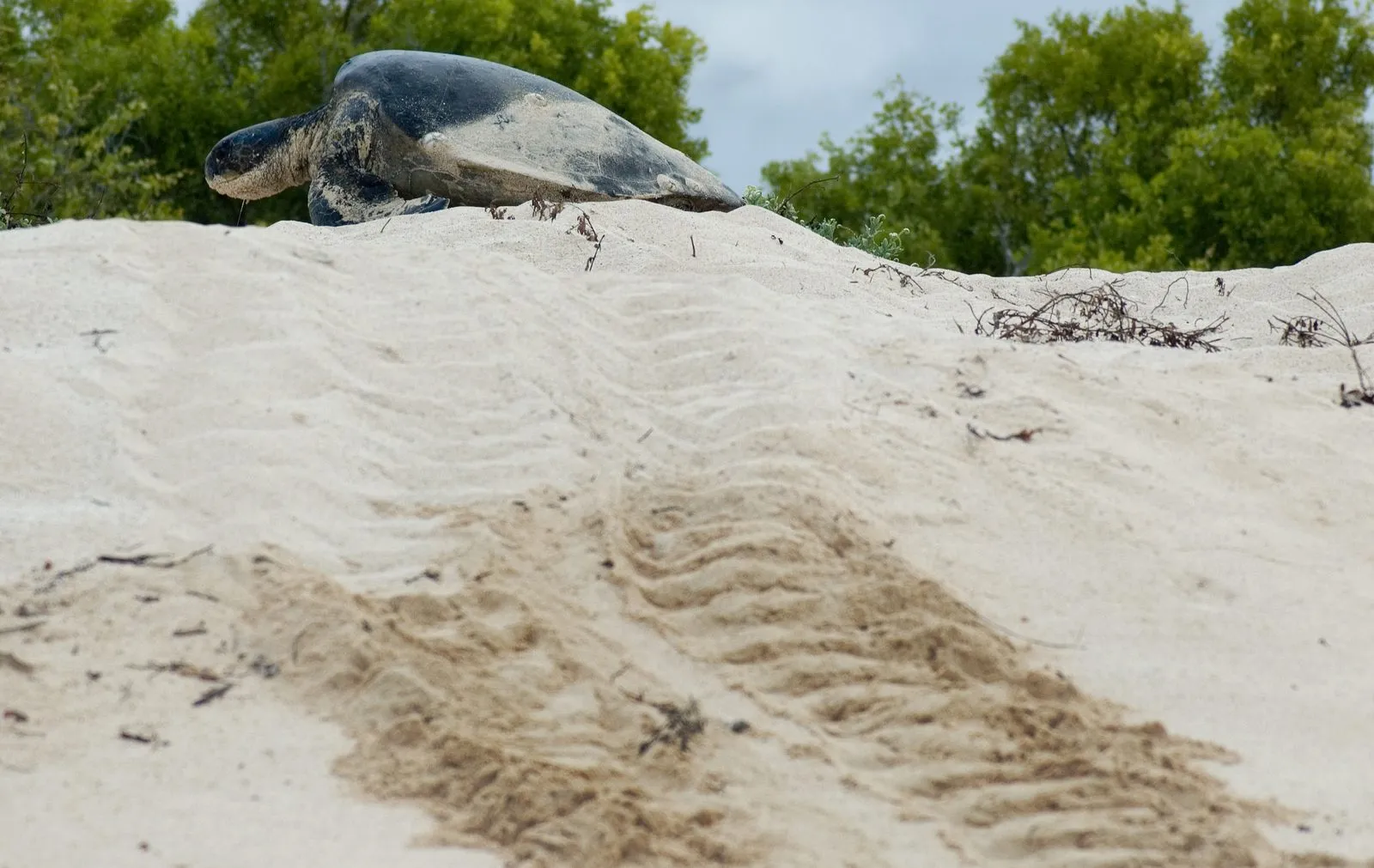
Green turtle while diving in Bonaire National Marine Park

Green sea turtle laying eggs Uploaded by Magnus Manske · CC BY 2.0 · source

Salt Pier

Beginner-friendly

Depth5–20 m

Industrial pier in the south with pilings encrusted in coral and sponge, seahorses clinging to holdfasts, eagle rays patrolling the sand, dense reef fish. Excellent night dive by boat.

  • seahorses
  • eagle rays
  • reef fish
  • coral pilings
  • night dive
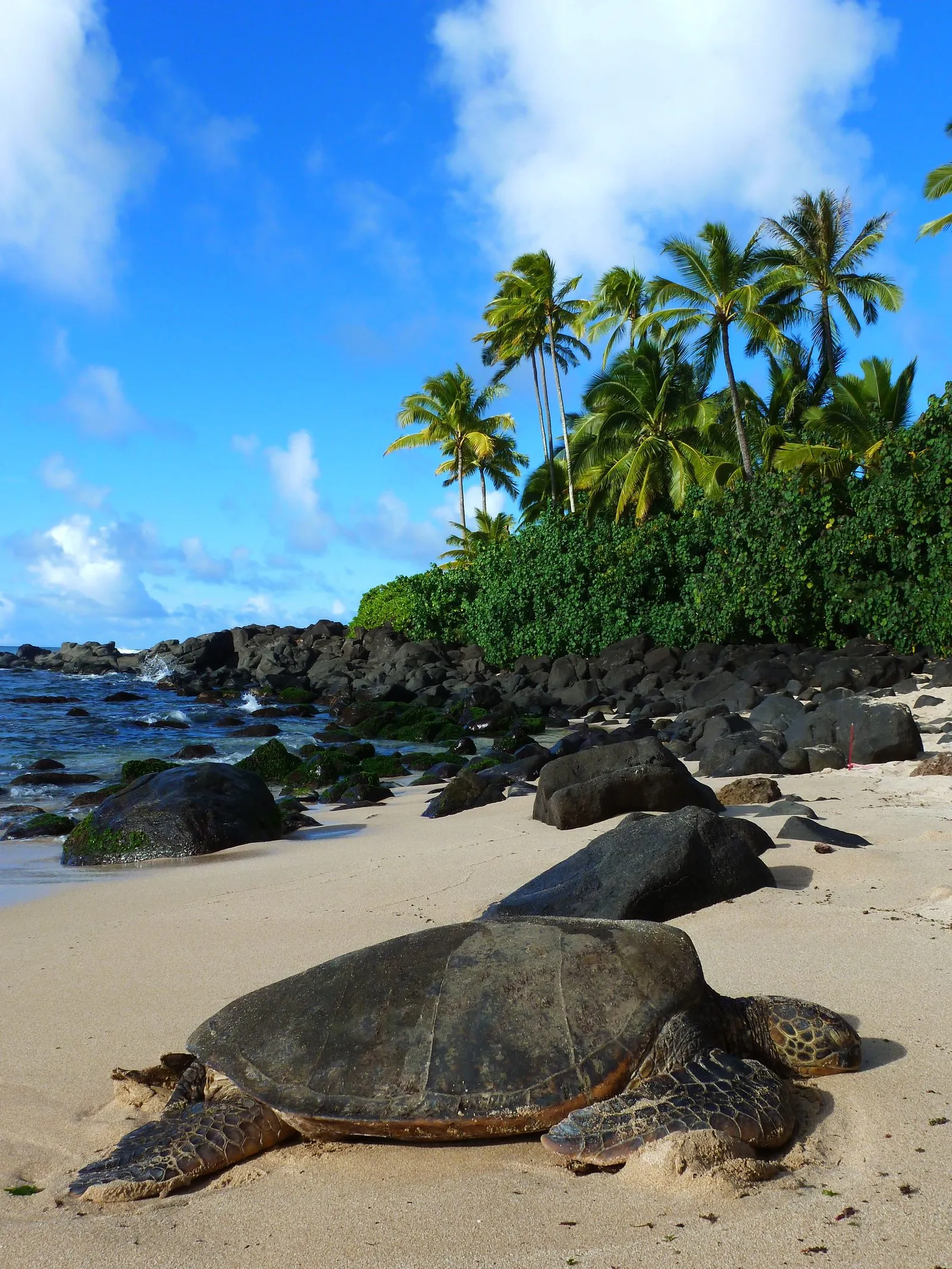
Green turtle while diving in Bonaire National Marine Park

Basking · CC BY 2.0 · source

Klein Bonaire. No Name

Beginner-friendly

Depth3–25 m

Pristine reef on the uninhabited islet across from Kralendijk, noticeably higher fish density than trafficked main-island sites. Boat access only; excellent for photography.

  • pristine coral
  • high fish density
  • turtles
  • clarity
  • reef fish
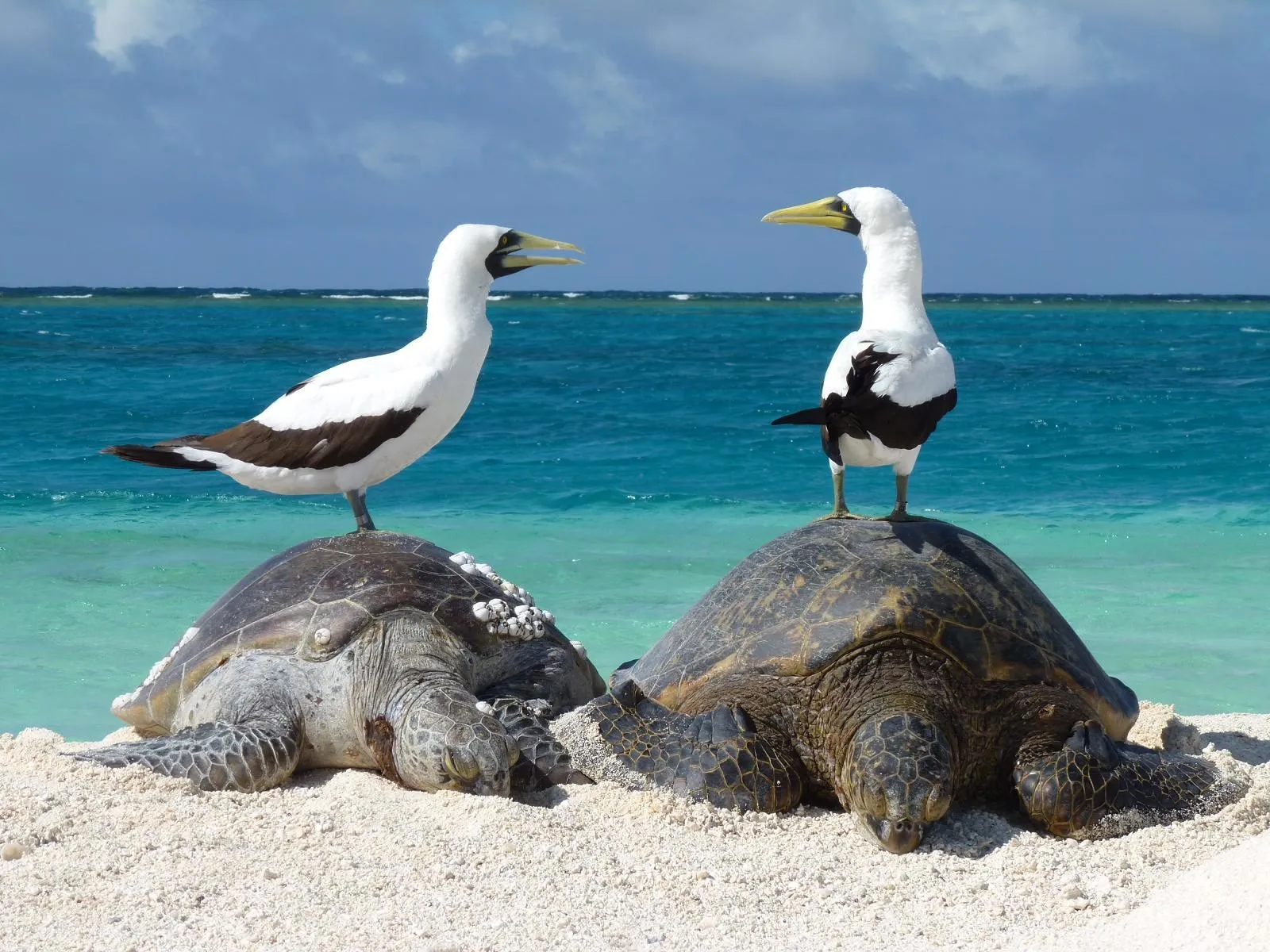
Green turtle while diving in Bonaire National Marine Park

PMNM Green Sea Turtles and Masked Boobies · Public domain · source

Buddy's Reef

Beginner-friendly

Depth5–30 m

One of Bonaire's most consistent all-round shore dives, turtles, seahorses on gorgonians, eagle rays, and healthy coral. Consistently popular with underwater photographers.

  • turtles
  • seahorses
  • eagle rays
  • gorgonians
  • coral garden

Plan your trip

Getting there

Fly to Flamingo Airport (BON), direct connections from Amsterdam (KLM year-round), Miami, Houston, Atlanta, and New York. No transit through Curacao or Aruba needed for most North American and European travellers. The airport is small; arrivals are fast and relaxed. Rent a car or pickup truck for shore diving independence, a truck with a tank rack is the classic Bonaire dive setup.

Minimum stay
4 nights (7+ for serious shore divers)
Book ahead
2–4 weeks ahead; Christmas and February book 2–3 months ahead

Certification & medical

Open Water minimum; no special cert needed for any standard site. Bonaire is ideal for newly-certified divers building confidence and log book dives. A Bonaire National Marine Park permit ($45 USD/year) is required for all divers, purchased on arrival at customs or at any dive shop. Nearest hyperbaric chamber is in Curacao (~30 min by small aircraft).

Infrastructure

Kralendijk has ATMs (USD is the official currency since 2011), supermarkets, pharmacies, and a medical clinic. The island is small, driveable in 2 hours. Infrastructure is functional and reliable; nothing is flashy. Electricity and water are stable. Pickup truck rental with a tank rack ($35–50/day) is the standard shore diving transport, book ahead in peak season.

Connectivity

Digicel and Telbo offer 4G across most of the island. WiFi at all dive resorts and most restaurants. US phones work on T-Mobile and AT&T international plans. The island is small enough that you're never truly off the grid.

Health & safety

Nearest hyperbaric chamber is in Curacao - ~30 min by small aircraft. Dive conservatively, particularly on multi-dive shore days (some divers do 4–5 dives/day here, which significantly increases decompression risk). Marine Park wardens patrol sites; no-touch rules are enforced and fines apply. Do not anchor on coral or remove anything from the water.

Peak season

Christmas–New Year and February half-term are busiest, tank queues at dive shops grow long and Town Pier permits book out weeks ahead. Apr–May and Oct–Nov are excellent shoulder periods: good conditions, fewer people, easier Town Pier access. Summer (Jun–Aug) is low season but diving is perfectly good, occasional rain, fewer tourists, lower prices.

Conditions and operator availability change. Always verify locally before booking.

Common questions about Bonaire National Marine Park

Is Bonaire National Marine Park suitable for beginner divers?

Bonaire National Marine Park is rated "Beginner-friendly". Open Water minimum; no special cert needed for any standard site. Bonaire is ideal for newly-certified divers building confidence and log book dives. A Bonaire National Marine Park permit ($45 USD/year) is required for all divers, purchased on arrival at customs or at any dive shop. Nearest hyperbaric chamber is in Curacao (~30 min by small aircraft).

When is the best time to dive Bonaire National Marine Park?

The best months are Dec, Jan, Feb, Mar, Apr, May. Diveable every single day of the year. Bonaire sits outside the main hurricane belt and has the most reliable weather of any Caribbean dive destination. Dec–May (dry season, light tradewinds) offers the calmest conditions and best visibility. Jun–Nov is still excellent for diving; occasional rain squalls pass quickly. There is genuinely no bad season here.

What can you see diving in Bonaire National Marine Park?

Divers come to Bonaire National Marine Park for Seahorses (longsnout & lined), Hawksbill & green turtles, Spotted eagle rays, Night life (octopus, tarpon, Spanish dancer), Reef fish density, Flamingos (above water). Mostly no current on the sheltered west coast, this is what makes Bonaire the world's pre-eminent shore diving destination. Some sites have mild drift currents; none are demanding. The east coast (windward side) is not diveable. Visibility is excellent year-round; water is warm and clear in every month.